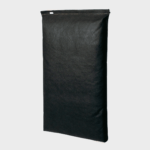
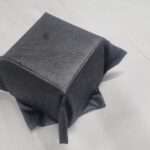
Acoustic composites are purpose-built materials made by combining two or more substances – such as foams, fibres or resins – to manage sound more effectively than any one component alone. Their structure is designed to absorb, block, diffuse or dampen sound depending on the need.
Key properties
- Precision – Composites are engineered to manage specific acoustic challenges
- Efficiency – Many offer strong performance across a wide frequency range
- Lightweight build – Their layered construction can reduce weight without compromising function
Examples: Fibreglass panels, resin-fibre laminates, foam-core tiles, and automotive-grade acoustic liners
Benefits
- Tailored solutions for complex sound environments (e.g. studios, restaurants, auditoriums)
- Effective sound control without bulky construction
- Customisable performance for absorption, isolation or diffusion
Limitations
- Typically more costly to produce than standard materials
- May require skilled installation to perform optimally
Non-composites
Non-composites are single-material products – like wood, concrete, plaster or foam – that haven’t been engineered specifically for acoustic control. While they’re not purpose-built for sound, their natural properties still influence how sound behaves in a space.
Key properties
- Natural variation – Performance depends on traits like density, porosity and rigidity
- Simplicity – Often cheaper and easier to source than composites
Examples: Brick walls, solid timber flooring, stick-on foam, standard drywall
Benefits
- Readily available and straightforward to install
- Dense materials (like concrete) offer decent natural sound isolation
Limitations
- Less control over frequency response or reverberation
- There is a risk of unbalanced acoustics if not paired with the correct treatment